
Every business with vehicles is already paying for the advertising space. The question is whether the vans, cars and lorries carry the brand or carry the factory white they came in. This guide is about how fleet operators in the UK use wrapping as mobile branding, what they get wrong, and what a fleet plan looks like when it is done properly.
Why fleets wrap
A van is on the road every working day, parked outside customers' houses, sitting in traffic and outside the supermarket at lunchtime. Unlike a billboard, it turns up exactly where the business works. Unlike an online advert, nobody can skip it. And unlike almost every other form of marketing, it is a one-off cost that keeps working for five years or more without a monthly invoice.
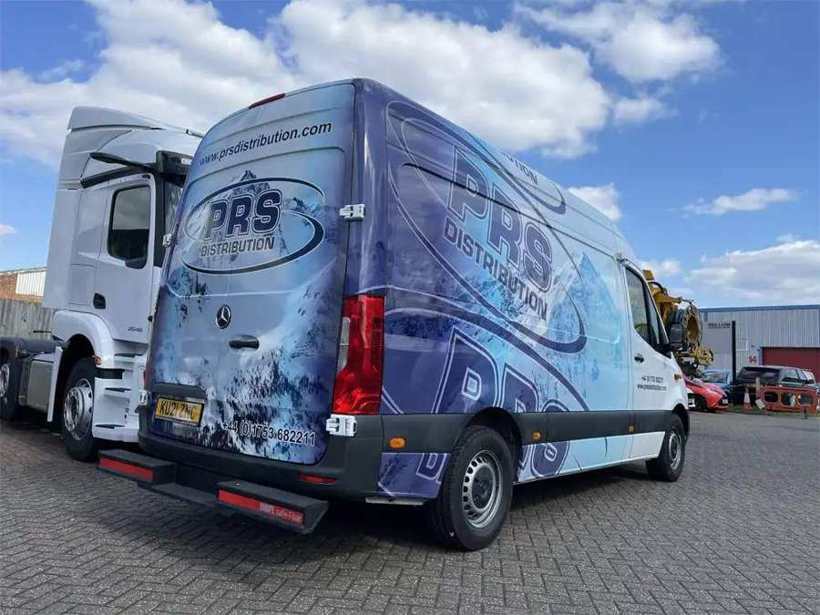
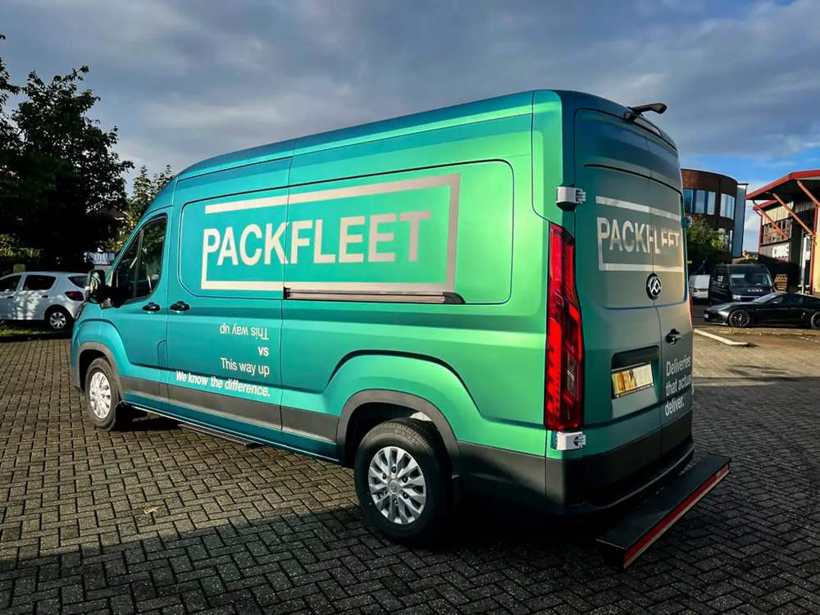
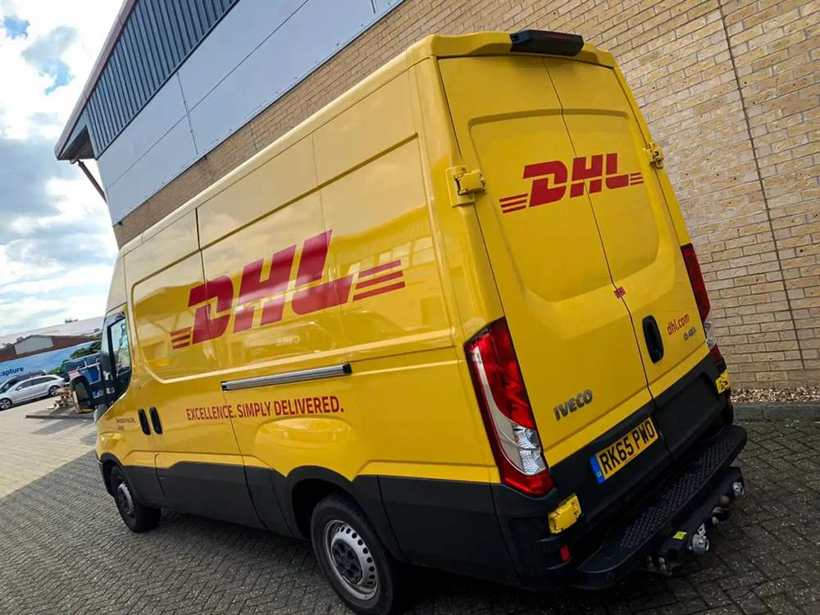
The businesses that wrap fleets fall into three groups. Trades and services whose next job comes from the street they are working on: plumbers, electricians, scaffolders, landscapers, cleaners. Delivery and logistics operators whose vans are the only part of the brand a customer ever sees: Packfleet, DHL, PRS Distribution. And consumer brands who use vehicles as moving campaign media: Nike, Red Bull, Vita Coco, Lucozade. The wrapping is the same. The design brief is different for each.
The three things fleet managers actually buy
Nobody who runs a fleet is buying vinyl. After twenty years of fleet work, what they are buying is three things.
- {01}Consistency. Vehicle fifty has to look identical to vehicle one, on a different model, fitted eighteen months later. That is a design system and a colour-matching process, not a paint job.
- {02}Downtime control. A van off the road is a van not earning. A fleet plan schedules vehicles in batches around the operation so the business never has more than it can spare off the road at once.
- {03}Someone to ring. When a van is rear-ended on a Friday night, the fleet manager wants a replacement panel printed and fitted, not a conversation about re-wrapping the vehicle. PRS Distribution have used our out-of-hours line at midnight for exactly that.
Consistency across a mixed fleet
Almost no fleet is one model. A Transit Custom, a Sprinter, a Berlingo and a couple of company cars might all carry the same brand. The identity has to scale across them without being redesigned each time. The answer is a livery standard: a written rule set for where the logo sits, how large the phone number is relative to the panel, what happens when a sliding door rail runs through the design and which colour is the background on each body type.
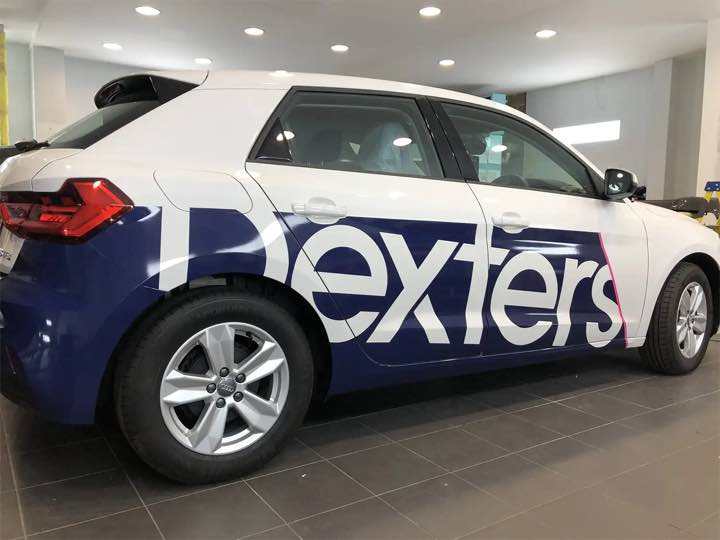
The standard is built on panel maps of the real vehicles, flat templates with every handle, rail, rivet and fitting marked. Dexters' estate agency fleet across London branches works this way: one standard, every new vehicle a repeat. It is also how a replacement door on a damaged van comes back matching the door next to it, printed from the same file on the same film.
“Fleet wrapping is a logistics job with vinyl at the end of it. The wrapping itself we have done thousands of times. What fleet managers actually buy is the planning.”
— Wrap Cube
Full wrap, partial wrap or sign writing for a fleet
- Full wrap: every panel printed, the van becomes the brand. The most impact, the most film, the most downtime per vehicle. Right for delivery brands and campaign fleets
- Partial wrap: printed graphics on the sides and rear over the van's base colour. Most of the impact for less film and a faster fit. The most common fleet choice
- Sign writing: cut vinyl logo, name and number on a factory-colour van. Cheapest, fastest, often same day. Right for trades and for fleets where the van colour is already the brand colour
- Mixed: cars sign written, vans partial wrapped, lorries full wrapped, all to one standard
The choice is usually made by downtime and by how long the vehicles stay in the fleet. A van on a three-year lease gets a partial wrap; a lorry the business owns for seven years gets a full one.
Running a rollout without stopping the fleet
A fifty-vehicle rollout does not happen in a week. It happens two or three vehicles at a time, in an order the operation can live with, over the weeks it takes. The sequence we use is a livery standard, panel maps for each body type, a proof and a pilot vehicle that is fitted and checked before anything else is printed, then a rolling schedule with a dated slot for every vehicle. Templates stay on file so additions later are repeats.
Fleet clients get a named account manager who can be reached out of hours. That is not a sales line. It is what turns a damaged van at midnight into a rebooked slot rather than a week off the road.
The lease-return argument
Most fleet vehicles are leased, and the lessor wants them back in the colour they left in. A wrap does that better than paint. Cast film protects the factory paint for the life of the lease and comes off cleanly with heat, so the van goes back with paint that has not seen weather for three years. Most lessors permit wrapping with written consent; our guide on wrapping leased vans and lorries covers the rules.