

If your vans, tippers or support trucks stop on or near live traffic, Chapter 8 markings are the difference between getting on site and being turned away. Here is what the guidance asks for, which vehicles it covers, and what we fit.
What Chapter 8 is
Chapter 8 is the part of the Traffic Signs Manual that covers vehicles stopping or working on public roads. It is guidance rather than law, but councils, highways contractors and site managers treat it as a requirement when they issue contracts and safety approvals. The aim is simple: a vehicle working on or near a road must be visible early enough for an approaching driver to react.
Which vehicles need it
- Highway maintenance fleets
- Roadworks and construction support vehicles
- Utility vans
- Recovery and breakdown trucks
- Tippers and flatbeds
- Traffic management vehicles
- Anything that stops in live traffic or on high-speed roads
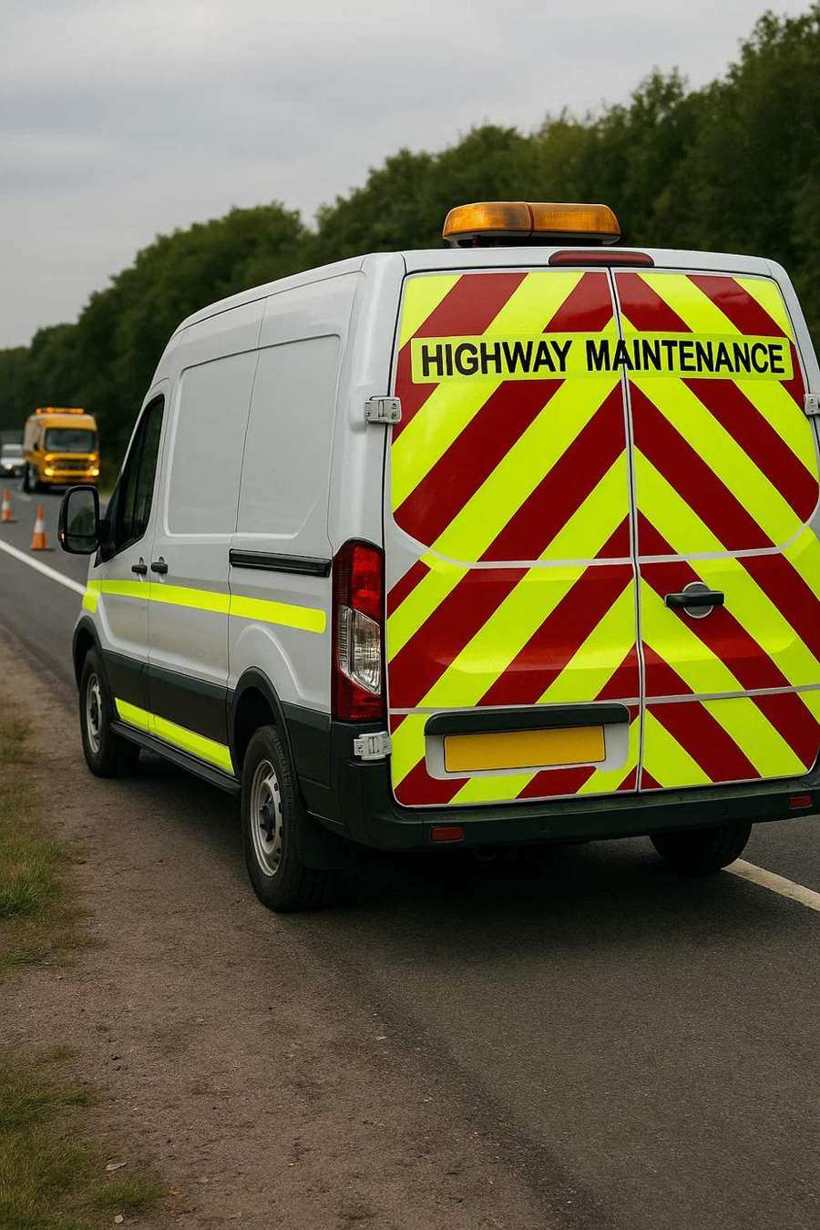
What the guidance asks for
- {01}Rear chevrons. Red and fluorescent yellow chevrons covering as much of the rear as practicable, made from Class B reflective material so they work in low light.
- {02}Fluorescent panels. Yellow panels on the rear or sides to lift daytime visibility.
- {03}Purpose wording. Text such as “Highway Maintenance” so other drivers understand why the vehicle is stopped or slow.
- {04}Side reflectivity. Reflective tape or panels along the sides so the vehicle reads from every angle. Larger vehicles benefit from microprismatic film.
- {05}A film that lasts. Reflective graphics live outdoors in rain, UV and road grit. Cheap material fades and lifts within a year.
“Councils and contractors will turn a non-compliant vehicle away at the gate. The chevron kit is the cheapest part of a highways contract to get right.”
— Wrap Cube
Reflective materials, and which one you need
Engineering grade reflective is the affordable choice for side markings and low-risk vehicles. High intensity film is brighter and more durable, with better distance visibility. Microprismatic film is the brightest of the three and the right choice for vehicles working in high-speed traffic or poor light. Which one you need depends on where the vehicle works, its mileage and what your client’s compliance check asks for.
How long reflective graphics last
Most reflective kits last five to seven years. Cleaning routine, sunlight and mileage all move that figure. Fitting indoors, in a clean and temperature-controlled unit, is what makes the difference at year five.
Staying compliant
- Use an installer who knows the Traffic Signs Manual
- Insist on certified reflective material, not a look-alike
- Have it fitted indoors, in a temperature-controlled unit
- Integrate the safety markings with your livery rather than sticking them over it
- Get aftercare and cleaning guidance in writing
We fit Chapter 8 kits alongside full liveries for highways and utility fleets across Surrey and London, indoors at Caterham. Send us the vehicle type and we’ll tell you what it needs.