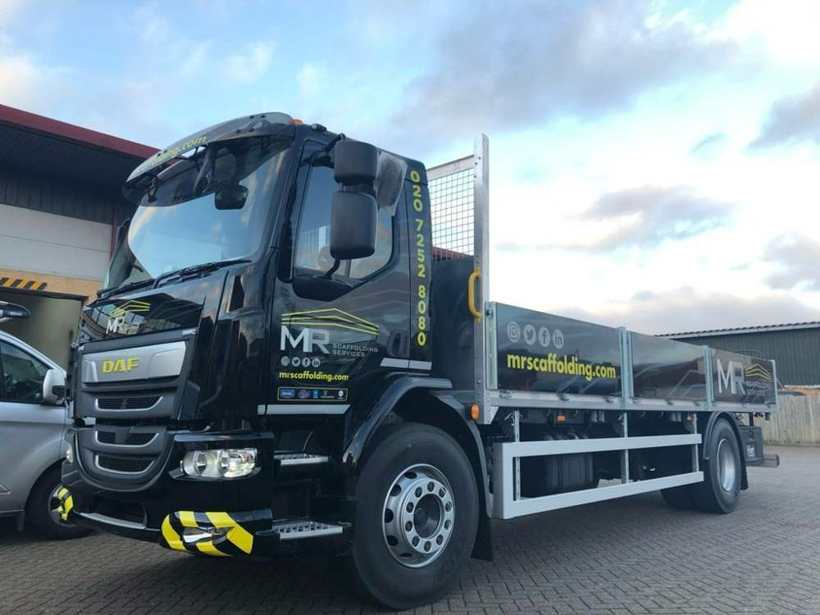
A scaffolding firm gets its next job from the street it is working on. The neighbour sees the scaffold go up, sees the name on the flatbed parked outside for three weeks, and rings the number when their roof needs doing. No other trade gets that long, static, local exposure from its vehicles. A wrapped van or lorry with the name, the number and the postcode area on it is working every hour it is parked.
The second reason is credibility. Scaffolding is a trust purchase. Main contractors, housebuilders and homeowners are handing over access to a building, and a matched fleet in a clean livery says the firm is established and insured before anyone has asked. Three vehicles in three different colours with magnetic signs say the opposite.
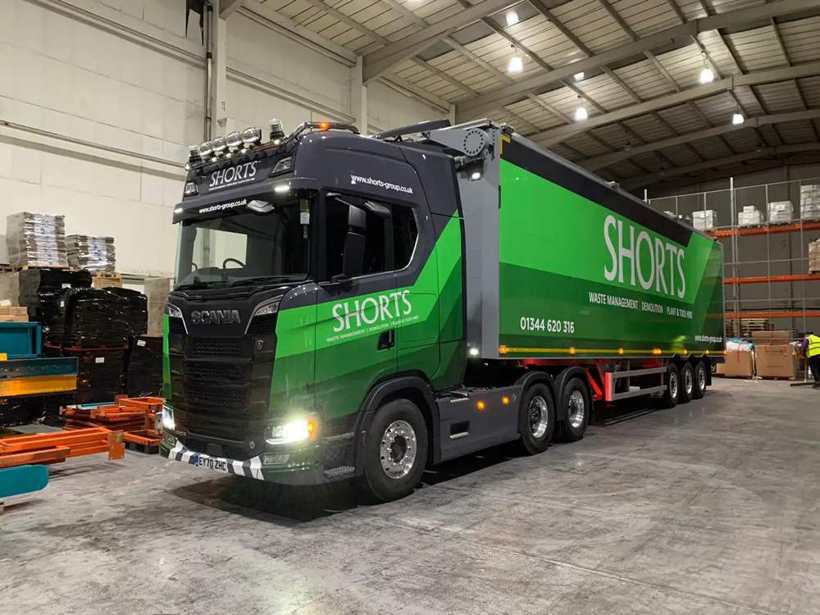
The 4 Summit structural metalwork vans and the MF flatbed are the kind of vehicle we mean: working trucks that look like they belong to a firm you would let on your site.
Scaffolding fleets are mixed by nature. A 3.5 tonne dropside, a 7.5 tonne flatbed, a Transit crew van and an 18 tonne beavertail might all carry the same name. Each is a different wrapping job. Flatbed cabs and dropside doors take a full or partial wrap. Headboards and toolboxes take cut vinyl or printed panels. Crew vans take a standard van wrap or sign writing. Tipper bodies need film that copes with being knocked by tubes and boards every day, so we keep graphics off the wear zones and on the cab, doors and headboard where they last.
- Cab and door wraps on flatbeds, dropsides and tippers, full or partial
- Headboard and toolbox graphics in cut vinyl or printed panels
- Crew van wraps and sign writing to match the lorries
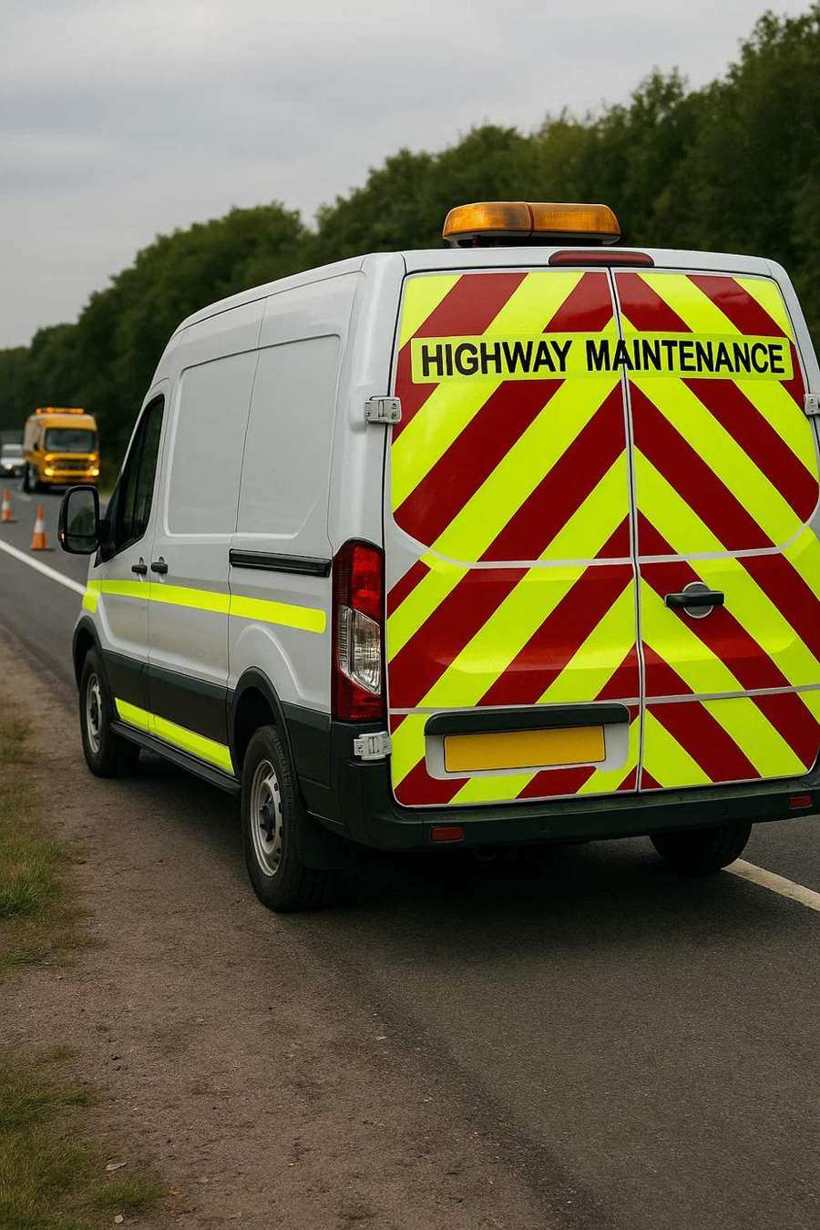
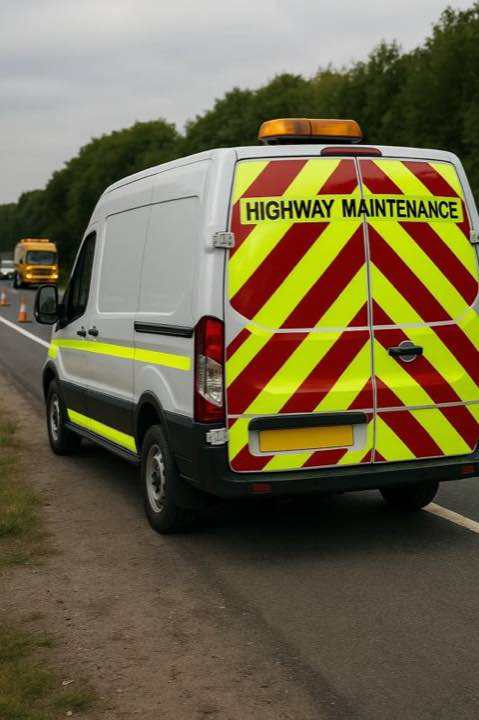
- Chapter 8 rear chevrons where vehicles stop on or beside the highway, which many scaffold contracts on main roads require
- Reflective lettering and high-visibility markings on vehicles working at night or on motorway jobs
We build one livery standard that works across all of them, so a new dropside bought next year looks like the rest of the fleet without redesigning anything.
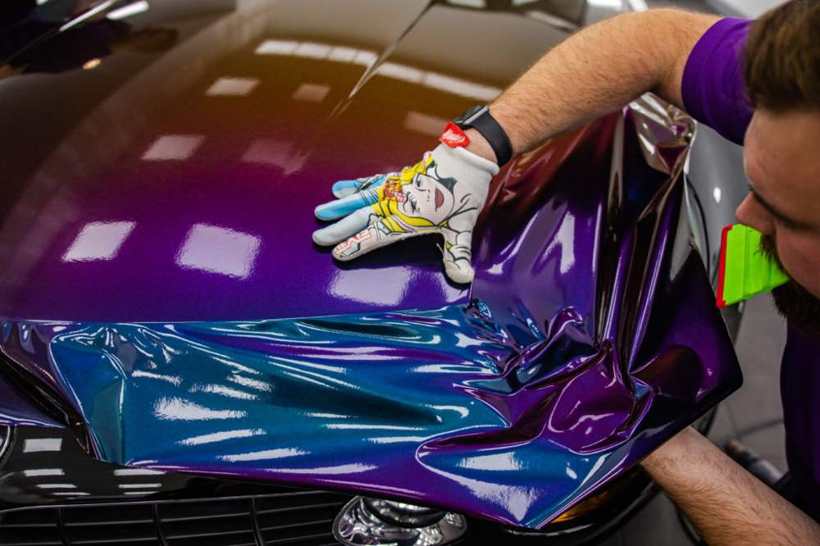
Scaffolding vehicles get knocked, scraped and washed harder than most. Calendered film, the cheap kind sold by some sign shops, shrinks back from its edges and cracks on a headboard within a year of that treatment. We fit cast film only, 3M and Avery, laminated where the design is printed, so it holds tight over rivets, door ribs and dropside hinges and keeps its colour for five to seven years. As a 3M Select Gold Partner we fit it to the manufacturer's specification, with their warranty behind it.
We also design for wear. Graphics stay off the load bed edges and the lower dropside panels where tubes and boards land, and the phone number goes where a driver behind you reads it and a board never hits it: the rear doors on a van, the cab doors and headboard on a lorry.
If your vehicles stop on or beside a live carriageway, on a high street scaffold, a bridge job or any highways contract, the client will usually ask for Chapter 8 conforming rear markings. That means red and yellow reflective chevrons on the rear in a specific layout and material, plus reflective side markings on some vehicles. It is a separate specification from the branding wrap and we fit both. Our guide to Chapter 8 compliance explains what the guidance asks for and which vehicles it covers.
Fitting chevrons at the same time as the livery is cheaper than doing it later, and it means the branding is designed around the chevron kit rather than fighting it.
- {01}Vehicle list. Every vehicle by type and body, so we know which are cab wraps, which are van wraps and which are headboard graphics.
- {02}Livery standard. One rule set for how the name, number and colours sit on a flatbed, a dropside and a van. Built on panel maps of the real vehicles.
- {03}Proof and pilot. You sign off a proof for each body type. The first vehicle is fitted and checked before the rest are printed.
- {04}Rolling schedule. One or two vehicles a day, timed around your jobs, so the fleet never has more than a couple off the road. Cut vinyl and partials are often same day.
- {05}Additions. Templates stay on file. A new vehicle or a replacement door is a repeat, not a redesign.
Fleet clients get a named account manager who can be reached out of hours. If a dropside gets rear-ended on a Friday, the replacement panel is printed and fitted, not the whole lorry.
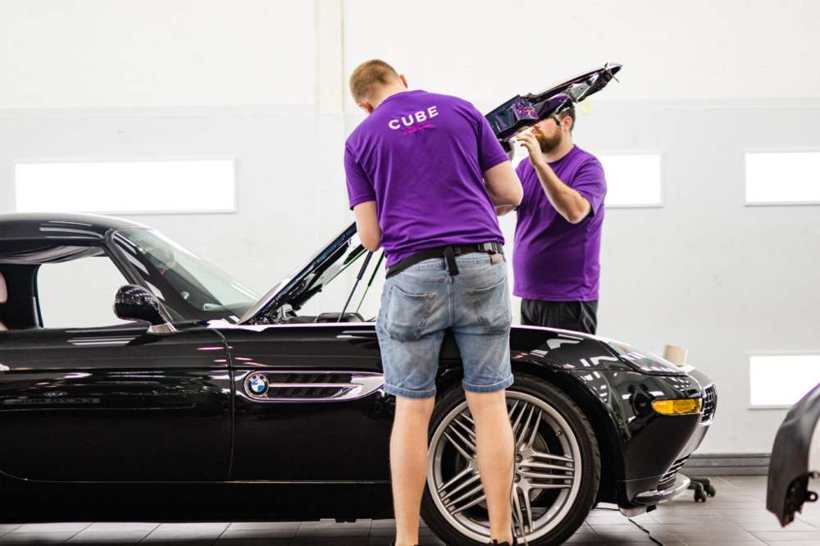
The unit is at The Cube, 153 Croydon Road, Caterham, off the A22, ten minutes from junction 6 of the M25, outside the Congestion Charge zone and big enough to take an 18 tonne lorry indoors. Scaffolding firms come from Croydon, Sutton, Bromley and Orpington, from Redhill, Reigate and Crawley, and from across south London. Drop the vehicle first thing and it is usually back with you the same day or the next morning.
Questions people ask before they call
Scaffolding fleet wrapping
Send the vehicle list by type and body and your logo, and we'll come back with a livery standard, a rolling schedule and a per-vehicle price. 020 8944 6360 for the commercial team.