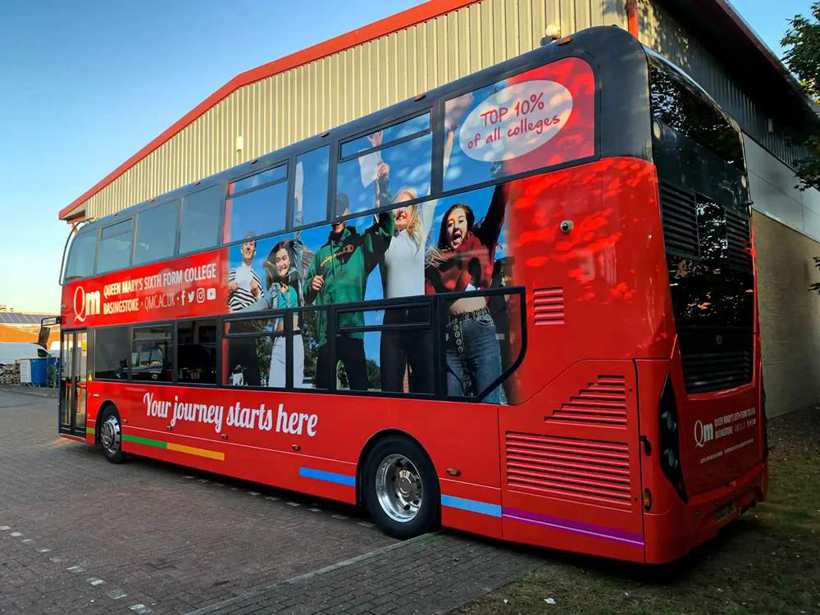
Bus advertising comes in three formats and the right one depends on the campaign length, the budget and how much of the vehicle the operator will release. A full wrap turns the whole bus into the brand and is the format for launches and campaigns that need to own the road. A partial wrap covers the sides and rear over the base livery and delivers most of the impact for a lot less film and downtime. Panels are printed graphics applied to defined areas, the rear, the side between the wheels or a window band, and are the format for short campaigns that change month to month.
- Full bus wrap, often including the roof where the route passes buildings that look down on it
- Partial wrap on the sides and rear, with the operator's livery kept on the front and roof
- Rear and side advertising panels sized to the operator's approved positions
- Window graphics in perforated one-way vision film, printed outside, see-through for passengers inside
- Sampling, hospitality and event buses for festivals and launches, fitted out inside and wrapped outside
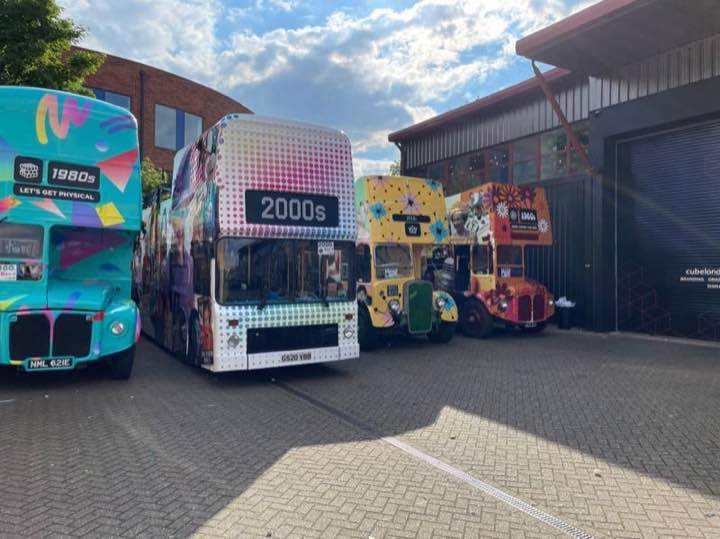
Campaign work has a launch date and the media has been booked around it. The Jubilee Pageant was twelve vehicles, seven of them double-deckers, wrapped to a single date for a broadcast watched by millions, with no second chance. What it needed was artwork proofed on templates of each bus type, film printed and laminated in batches, and vehicles scheduled through the unit in an order that kept the operator running. That is the process every campaign gets, whether it is one bus or twelve.
We proof on a panel map of the exact vehicle so a seam never cuts through the headline and the destination board does not sit over the logo. Once the proof is signed off the print runs overnight, the bus comes in, and it leaves on the day we said it would. The Take That and Aitch tour vehicles were both wrapped to the first date of a tour.
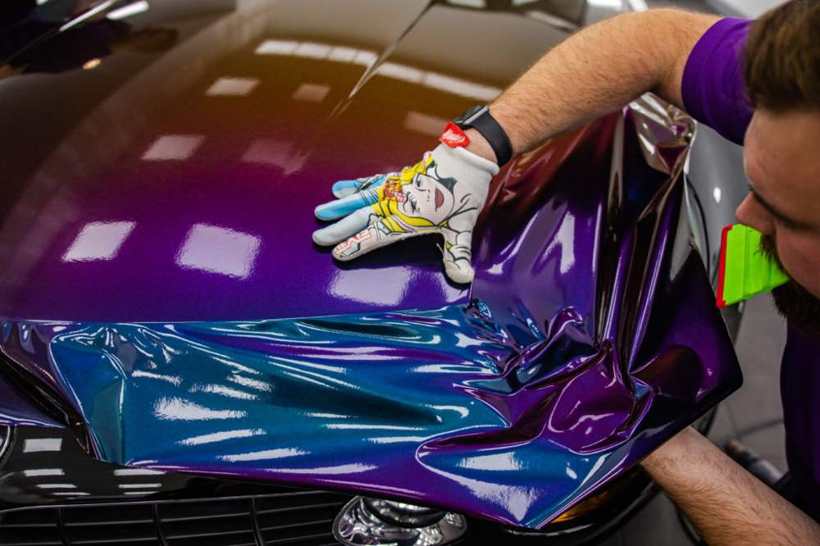
Most bus wraps are removed within a year. That is the part of the job operators worry about, because a campaign that leaves adhesive or lifts paint costs them a respray and costs you the relationship. We specify the film for the campaign length: a removable cast film for three to six month campaigns, a longer-life laminated film where the wrap is staying a year or more. Either way the film is designed to come off in sheets with heat, leaving the livery underneath as it was.
We quote removal alongside the fit so the whole campaign cost is known up front, and we can fit the next campaign in the same visit. Operators around Croydon, Redhill, Crawley and Gatwick, and London tour and shuttle operators, use us for exactly that rotation.
Four kinds of client buy bus advertising from us. Brands running a launch or a seasonal push who want the vehicle to be the campaign. Media agencies who have sold the space and need a production partner who will hit the date. Operators who sell their own advertising positions and want a fitter who will not damage the livery. And event teams who need a hospitality or sampling bus that looks the part outside and works inside.
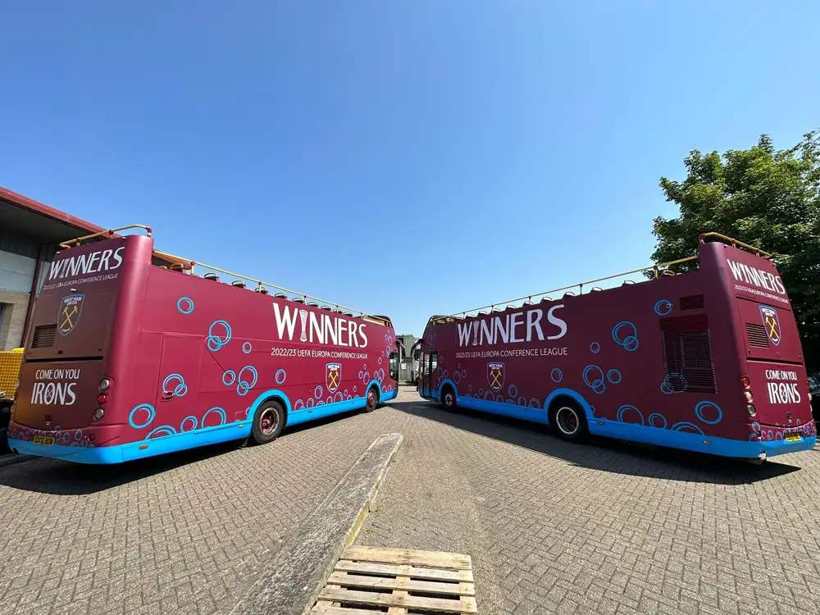
Nike, Red Bull, Vita Coco, Rude Health and Puma have all had campaign vehicles through the unit, and the Jubilee, West Ham and Take That buses are the ones we point to when someone asks whether we can handle numbers and dates. Several hundred vans a year for local trades keep the installers sharp in between.
Buses are washed hard, often, with strong chemicals, and they live outside. We print on HP latex to HP's colour profiles, on 3M IJ180 or Avery MPI cast film, laminated, because cast film holds on big panels and over rivets and does not shrink back from its edges. Colour is matched to your brand references and proofed before anything is printed. As a 3M Select Gold Partner the film is fitted to the manufacturer's specification and carries their warranty on the finished graphic.
For window graphics we use perforated one-way vision film so passengers can see out and the advert reads from outside. Which windows can be covered varies by vehicle and use, and we will advise on your operator's rules.
- {01}Brief. Campaign dates, number and type of vehicles, the operator's approved advertising positions, and your artwork or brand files.
- {02}Panel map and proof. Artwork placed on a template of each bus type. On a double-decker the seams across the curved rear and around the windows are the whole game.
- {03}Print and laminate. HP latex on cast film, laminated, in batches sized to the schedule.
- {04}Fit indoors. At Caterham, at a controlled temperature, with proper access to the roof and upper deck, sequenced so the operator keeps running.
- {05}Inspection and handover. Every panel and edge before the bus goes back into service.
- {06}Removal. Booked for the end of the campaign, or the next campaign fitted in the same visit.
A full double-decker is typically three to five days including settle time. Partial wraps and panels are one to three days. We will give you a dated plan once we have the vehicle list and the artwork.
Questions people ask before they call
Bus advertising wraps
Tell us the campaign dates, the vehicles and send the artwork. We'll come back with a proof on the bus type, a dated plan and a price. 020 8944 6360.