
Yes, carefully. A pressure washer will not hurt a properly fitted cast film wrap if you keep the lance a sensible distance from the panel, stay away from the edges and use cold or warm water rather than hot. It will lift a badly fitted edge or a cheap film in seconds, which is why the question gets asked. Here are the rules our fitters give every customer.
The four rules
- {01}Distance. Keep the nozzle at least half a metre from the panel, further on edges. Close-range pressure gets under the film at seams and recesses.
- {02}Angle. Spray at the panel, not along it towards an edge. Water driven under an edge is what lifts film.
- {03}Temperature. Cold or warm water only. Hot water softens the adhesive and the film, which is exactly what your installer used heat for when fitting it and what you do not want a jet wash doing.
- {04}Nozzle. A fan jet, not a pencil jet or a rotary turbo nozzle. The concentrated nozzles that strip moss off patios will strip film off a bumper.
Manufacturers publish guidance along these lines, and the numbers vary a little between 3M and Avery, but the principle is the same: moderate pressure, a wide fan, distance, cool water. If you would not point the lance at your own hand from that distance, do not point it at a wrap edge.
Why edges are the weak point
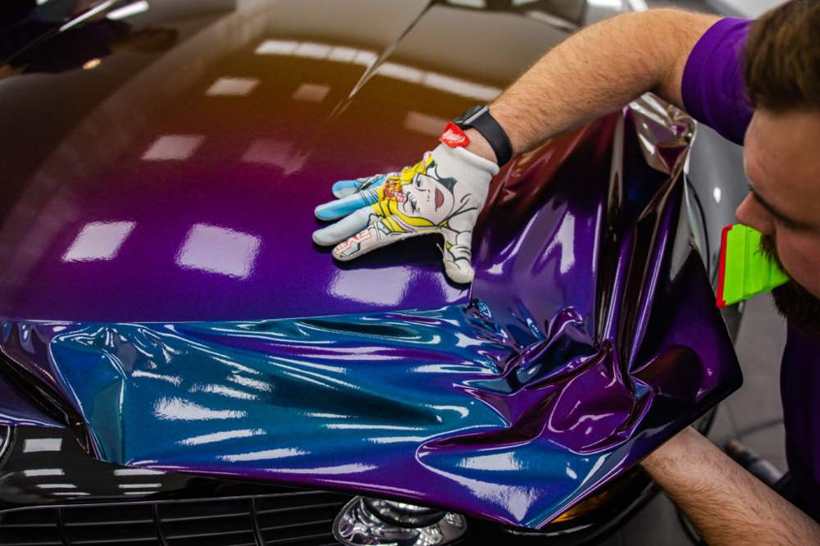
In the middle of a panel, film has nowhere to go. At an edge, a seam, a door shut or a wrapped return, there is a line where the film ends and water under pressure can get beneath it. A properly fitted wrap has every edge post-heated so the film has taken the shape of the panel and the adhesive has fully bonded, and that edge will take a normal wash for years. A rushed edge, or a cheap film that has shrunk back a millimetre, is where a jet wash finds its way in.
This is also why we do not release a full wrap on the day it is fitted. The overnight settle gives the adhesive time to reach full bond before the vehicle sees weather or a wash. Our guide to how long a wrap takes explains the settle.
Brush car washes are the real problem
Ask any installer what damages wraps and they will say the automatic brush wash before they say the jet wash. The rotating brushes carry grit from every car before yours, and they drag it across the film and into the edges hundreds of times a wash. On gloss film that is swirl marks; on matte and satin it is a shine the film should not have; on edges it is lift. Hand wash or touchless only, for the life of the wrap. It is the single most important aftercare rule.
“Cold water, a fan jet, half a metre back, never at an edge. Do that and the pressure washer is fine. It is the brush wash that ruins wraps.”
— Wrap Cube
Matte and satin films
Matte and satin colour change films are more sensitive to washing than gloss. Pressure washing is fine within the rules above, but avoid any product with wax, gloss enhancer or polish, because it fills the matte texture and leaves shiny patches that do not come out. Use a pH-neutral shampoo and products labelled for matte film. Dry with a clean microfibre rather than letting it air dry, because water spots show more on a flat finish.
What to do if an edge lifts
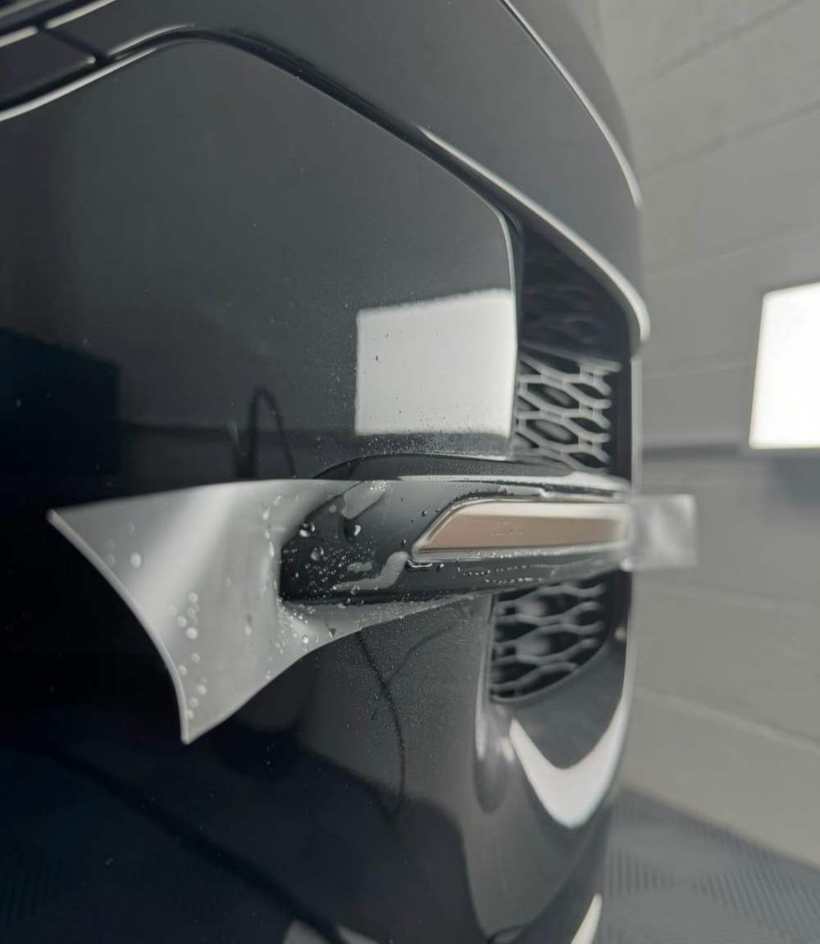
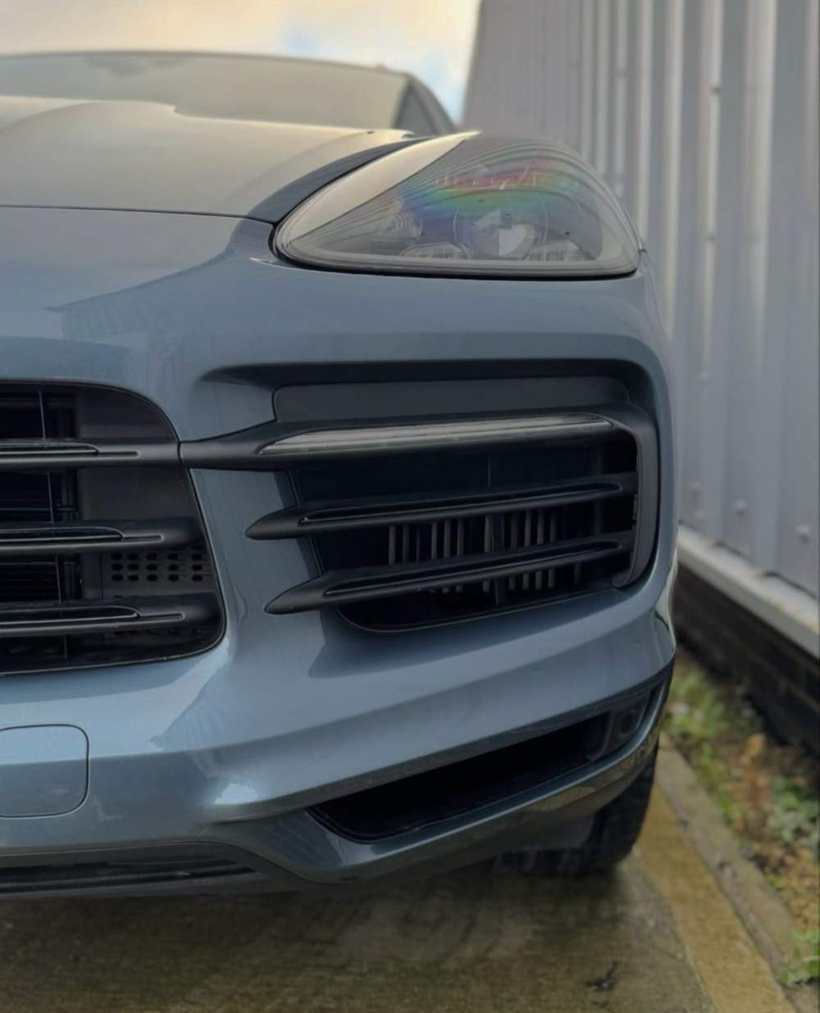
Stop washing it, do not press it back down with a finger, and ring your installer. A lifted edge on film inside its life can usually be cleaned, warmed and re-laid in minutes if it is caught early. Left for weeks, dirt gets under it and the section has to be replaced. Vehicles we wrapped can come back to Caterham for exactly this, and fleet clients have an out-of-hours line for it.